North Island Inspection Services Murray Kennedy-MacNeill
Owner/Inspector
Courtenay, B.C.
Murray Kennedy-MacNeill


Murray Kennedy-MacNeill
Phone: 250-338-1947
Cell: 250-897-5265
Toll free: 1-877-338-1947 northislandinspections.com


Summer 2009
Newsletter

 Hello Friends
 

Welcome to the summer issue of North Island Inspection Services’ newsletter. The winter blahs and wet spring are a faint memory and we're now into the scorching days of summer. (He says looking out at the first rain in a month - Oh well, here's hoping... ) Lower interest rates and dropping prices have caused activity in the housing market again so the winter doldrums are a thing of the past now as things are definitely getting busier these days.

As I said in the last issue, this newsletter has been sent to those who may be interested in receiving it, but if you’d like to be removed from this list please reply to this email and put “remove” in the subject line and you will be removed from the list. Fortunately there only a few removal requests last time so hopefully you'll continue to find it interesting.

Tips for Realtors: 

    What you need to know about the new BC Government Home Inspector Regulation


April 1, 2009. VICTORIA, BC - Home inspectors in British Columbia are now required to be licensed by the Business Practices and Consumer Protection Authority (BPCPA).

On January 30, 2009 the government announced that BC would become the first province to require home inspectors to obtain a license to better protect buyers and to ensure that home inspectors are qualified to make professional assessments. The new regulation requires home inspectors to be a member of a recognized association. To further strengthen professional credibility and enhance consumer protection, the BPCPA also requires all home inspectors to carry errors & omission as well as general liability insurance in order to obtain a license.


Realtors should:

- Be aware that home inspectors are required to be licensed by the BPCPA as of March 31, 2009;

- Be aware that home inspectors are now required to meet training standards of one of the following associations:

1. Canadian Association of Home & Property Inspectors (BC);

2. The Applied Science Technologists and Technicians of British Columbia (may also be referred to as the BC Institute of Property Inspectors);

3. The National Certification Program for Home and Property Inspectors, or

4. Satisfy transitional provisions established by the Director of the BPCPA.

- Encourage consumers to check the BPCPA website (www.bpcpa.ca) to verify if a home inspector is licensed;

- Encourage consumers to ask to see the BPCPA wallet-sized license issued to home inspectors before signing a contract for a home inspection; and,

- Contact the BPCPA with any inquiries or complaints at      1 888 564-9963.


Realtors should NOT:

- Request information about the contents of a home inspection report as it is against the law for home inspectors to disclose the contents except:

1. With permission from the consumer;

2. As required by law; or

3. If in the opinion of the licensee the property poses a serious health or safety risk.

- Make a referral to a home inspector if there is a conflict of interest in relation to a home inspection that results in a material gain for the home inspector.

Penalties for violation of the regulations can range from having conditions imposed on the licensee to penalties up to $5,000.

To find out more information about the new regulation or to ensure a home inspector is licensed by the BPCPA, visit www.bpcpa.ca.


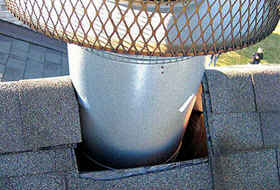
"Flashing!? I don't need no stinking flashing!"

     (thanks Neil)


Defects, Disclosure and Caveat Emptor

from Legally Speaking -  May 2009


 It’s trite law that a seller and a listing REALTOR® have a duty to disclose known material latent defects, but not patent defects. Sometimes the distinction as to what constitutes a patent defect or a latent defect isn’t clear.

Take a sump pump in the crawl space, for instance. Is it a latent defect warranting disclosure by a listing REALTOR®? The BC Supreme Court has held that it isn’t, overturning, on appeal, the Provincial Court’s decision finding a seller and her agent liable for failing to disclose to the buyers the existence of a sump pump in the crawl space of the property they purchased. After briefly viewing the property, and without going into the crawl space, the buyers chose to make a subject-free offer. The buyers had reviewed the Property Disclosure Statement (PDS), which indicated the seller wasn’t aware of any water problems in the crawl space. Shortly before completion, the buyers learned the property may have had water ingress issues in the past. The buyers sought to inspect the property before completion, but the seller refused access.

After seeking legal advice, the buyers completed the purchase and, upon gaining access several days later, found water standing in the crawl space. The buyers sued their agent, the seller and the seller’s agent. The Provincial Court found the seller and her agent liable for negligent misrepresentation and negligence, after concluding that the presence of the sump pump signified a structural defect that should have been disclosed on the PDS. The seller’s agent denied any knowledge of a sump pump. However, the Provincial Court accepted the seller’s evidence that she had disclosed the existence of the sump pump to her agent, and that he had advised it need not be disclosed if the seller hadn’t had any water problems. The seller admitted at trial that the previous owners had disclosed the sump pump and past water issues to her when she purchased the property, but she didn’t convey her knowledge of the previous owners’ water issues to her agent.

The Provincial Court held that the manner in which the seller completed the PDS constituted a negligent misrepresentation, which misled the buyers and justified their decision not to carry out a further inspection of the property. The Provincial Court found the seller’s agent a party to the misrepresentation, and negligent for failing to make reasonable enquiries.

The Provincial Court’s finding against the seller’s agent was successfully appealed to the BC Supreme Court, which held that the existence of a sump pump wasn’t a material defect. Even if it was, it was a patent defect, discoverable upon reasonable inspection, and therefore didn’t require disclosure. The Supreme Court reiterated the principles set out in Cardwell v. Perthen: that the onus rests upon a buyer to carry out a reasonable inspection of the property and that, for those defects or conditions discoverable upon a reasonable inspection, the doctrine of caveat emptor strictly applies. The court held that the manner in which the PDS was completed didn’t eliminate the buyers’ obligation to carry out a reasonable inspection of the property, and the lack of an inspection didn’t obviate the doctrine of caveat emptor or make the distinction between patent or latent defects irrelevant.

Where there’s confusion about whether a particular condition may be categorized as patent or latent, full disclosure is recommended to avoid a lawsuit. Also, as discussed in Legally Speaking 415,buyers should be warned to carefully inspect the property they propose to purchase and, if they aren’t qualified to do so, to engage qualified professionals to do so on their behalf.


- Jennifer Clee, Real Estate Errors & Omissions Insurance Corporation, Vancouver, BC


Phone/Fax: 250-338-1947 | Cell: 250-897-5265 | Toll free: 1-877-338-1947
www.northislandinspections.com